
The world our children are growing up in is very different from the world we experienced as kids. For earlier generations, technology was a tool. For today’s generation, technology has become a companion. AI voice assistants, learning bots, emotional AI chat apps, and smart toys are not just gadgets—they are becoming part of a child’s daily environment.
This shift is not small. It is a transformation that will influence how children think, learn, socialize, and build relationships throughout their lives.
Welcome to AI Parenting, where raising kids means understanding not just human needs, but also digital interactions and the psychology behind them. As AI companions become more intelligent, more emotional, and more integrated into homes, parents must learn how to guide children in a world where digital friends might feel as real as human ones.
This blog explores how AI companions are shaping childhood, what parents must know, the hidden risks, and how to prepare children for a healthy future in an AI-powered society.
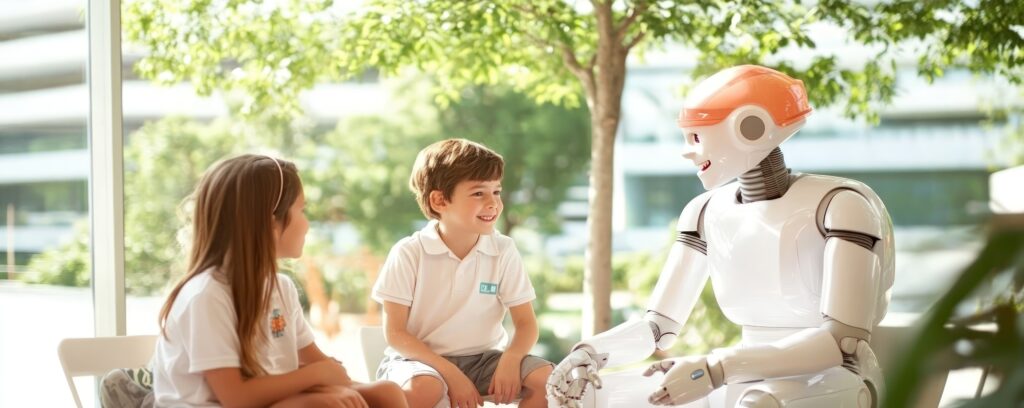
What Exactly Are AI Digital Companions?
AI digital companions are intelligent systems designed to interact, communicate, and sometimes emotionally respond like humans. They may appear as:
- AI chat friends
- AI learning tutors
- AI toys (robots, smart dolls, interactive devices)
- Voice assistants like Alexa and Google Assistant
- Personalized AI agents trained on a child’s preferences
- Emotional AI apps that talk, respond, and mimic empathy
These companions don’t just answer questions—they learn, adapt, and build a personalized bond with the child.
This provides many opportunities for growth and learning, but it also introduces challenges parents must be aware of.
How AI Companions Are Changing Childhood
1. Kids Now Learn Faster, Earlier, and More Independently
AI learning tutors explain concepts with endless patience.
They repeat, adjust, simplify or expand lessons based on the child’s progress.
Children can:
- Ask unlimited questions
- Learn in their preferred style
- Get instant answers
- Explore topics with curiosity
- Practice languages, math, reading, science
This type of personalized learning was unimaginable 10 years ago.
However, such ease can reduce the habit of deep thinking if not supervised.
2. Children Are Bonding Emotionally With AI
Kids naturally trust friendly voices.
They treat AI assistants like friends who:
- Never get angry
- Always listen
- Understand feelings
- Respond instantly
- Seem supportive
For a child, this feels comforting—like a perfect companion.
But the emotional bond raises questions:
- Will kids rely more on AI than parents?
- Will they develop unrealistic expectations from humans?
- Will they withdraw socially?
These questions matter because emotional development in early years shapes adulthood.

3. AI Is Influencing Children’s Creativity
AI tools offer stories, drawings, music, and ideas within seconds.
This boosts creativity by:
- Inspiring imagination
- Encouraging faster learning
- Providing new perspectives
But it can also limit original thinking if children depend too much on AI instead of exploring ideas independently.
Parents must ensure a balance between AI-supported creativity and human imagination.
4. Screen Time Is Turning Into “Smart Time”—But Still Needs Limits
Traditional screen time was passive—videos, games, and endless scrolling.
AI screen time is interactive:
- Asking questions
- Solving problems
- Creating art
- Learning languages
- Talking to companions
Although this is healthier, screen boundaries are still essential to protect mental health and physical development.
5. AI Is Reshaping Kids’ Social Skills
AI companions may become easier to talk to than humans.
Children might prefer AI because:
- It doesn’t judge
- It always understands
- It doesn’t interrupt
- It gives perfect responses
But social skills are built by interacting with imperfect humans, not flawless algorithms.
Children need:
- Friendships
- Group activities
- Real-world communication
AI should supplement—not replace—human relationships.
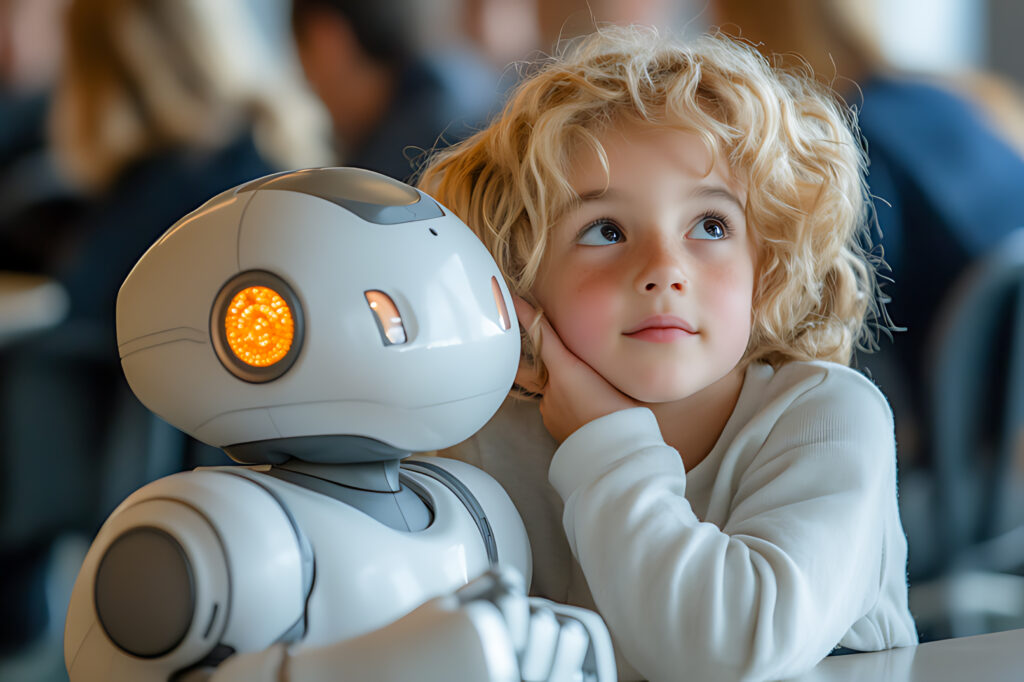
Benefits of AI Digital Companions for Kids
AI, when used correctly, can be incredibly beneficial. Here are the strongest advantages:
✔ Personalized Learning
AI adjusts difficulty, speed, and method based on how the child learns.
✔ Instant Knowledge Access
Kids no longer wait for answers—they explore instantly.
✔ Emotional Support
Some AI tools identify sadness or frustration and respond gently.
✔ Creativity Boost
AI inspires new stories, ideas, drawings, and games.
✔ Better Communication Skills
Language-learning AI helps improve vocabulary, grammar, and fluency.
✔ Safe Play & Exploration
Kids can explore new concepts safely, with no external harmful influence.
Used wisely, AI becomes a powerful educational ally for parents.
Risks Parents Need to Understand
AI companions also come with concerns that parents should NOT ignore.
1. Emotional Dependence
Children may prefer AI over humans.
Warning signs include:
- Talking more to AI than family
- Feeling upset when AI is unavailable
- Believing AI is their “best friend”
Parents must guide children to maintain healthy human relationships.
2. Reduced Social Development
Real-life communication has tone, emotions, reactions, and body language.
AI can’t fully replicate this.
Children might become:
- More shy
- Less patient
- Less tolerant of imperfections
- More socially awkward

3. Privacy & Data Concerns
AI companions learn by collecting data.
If not monitored, kids might reveal:
- Personal details
- Emotions
- Location
- Family information
Parents must choose safe, child-friendly AI tools with strong privacy protections.
4. Overreliance on Quick Answers
AI gives instant solutions.
Kids may stop practicing problem-solving or deep thinking.
Parents should encourage:
- Brainstorming
- Trying before asking
- Reading and exploring offline
5. Impact on Imagination
If AI creates everything—stories, drawings, answers—children may use their imagination less.
A balanced approach is essential.
Related Read: AI and Kids Mental Wellness
If you want to understand how technology impacts your child’s emotional well-being, don’t miss our detailed guide:
👉 AI and Kids Mental Wellness: A Parent-Friendly Guide to Safe Technology
This article explains how AI tools influence your child’s mental health and offers simple strategies to build safe, healthy digital habits.
A Parent’s Role in the AI Era
Parents don’t need to fear AI.
They need to understand it.
Here’s how to raise kids confidently in a world filled with AI companions.
1. Teach Kids the Difference Between Reality & AI
Children must understand:
- AI is a tool, not a real friend
- It does not “feel” emotions
- It cannot replace human relationships
This builds healthy emotional boundaries.
2. Set Clear AI Time Limits
Treat AI use like healthy screen time.
Suggestions:
- Under 6 years: 15–30 minutes/day
- Age 7–12: Up to 1 hour/day
- Age 13–17: Up to 2 hours/day for learning
Balance AI time with:
- Outdoor play
- Family conversations
- Hobbies
- Social interactions
3. Co-Use AI Tools With Your Child
Sit with your child while using AI apps.
Ask questions like:
- “What did you learn today?”
- “Do you think the AI is correct?”
- “How would YOU answer this?”
This transforms AI into a shared learning activity.
4. Choose Safe, Child-Friendly AI Tools
Look for:
- No ads
- Strong privacy policy
- Parental control dashboard
- Age-appropriate content
Avoid unknown apps or tools that collect too much personal information.
5. Encourage Human Creativity
Before children ask AI for help, encourage them to:
- Draw on their own
- Write a story first
- Solve a puzzle independently
- Think before asking
AI should amplify creativity, not replace it.
6. Discuss Emotions Openly with Kids
When AI companions express empathy, explain:
- Emotions in AI are programmed
- Real people feel differently
- Human relationships are complex and valuable
This helps develop emotional intelligence.
How AI Will Shape Future Childhoods (2026–2035)
The coming years will bring even more advanced AI companions. Kids may have:
- AI-powered school assistants
- Emotional AI robots at home
- AI friends in AR glasses
- Personalized digital tutors
- Voice-based AI siblings
Children born today will see AI as normal as electricity or the internet.
Parents who understand AI today will raise:
- More confident kids
- More responsible digital citizens
- More emotionally aware individuals
- More future-ready learners
AI in itself is not the problem.
Unsupervised, unguided AI is.

Best Practices for Healthy AI Parenting
Here is a simple framework parents can follow:
✔ Guide – Don’t ban AI
Banning AI creates curiosity and secrecy. Instead, guide children on healthy use.
✔ Monitor – Don’t spy
Keep an eye on apps and conversations without breaking trust.
✔ Balance – Don’t overload
Mix AI learning with outdoor play, reading, creativity, and socializing.
✔ Communicate – Don’t ignore
Talk openly about AI, emotions, privacy, safety, and boundaries.
Educate – Don’t fear
Learn AI basics yourself so you can teach your child wisely.
When parents stay involved, AI becomes a tool for growth—not dependency.
Conclusion
AI companions are changing the way children learn, play, and interact. They offer massive opportunities for personalized learning, creativity, and emotional support. But they also come with risks: emotional dependence, privacy issues, reduced social skills, and loss of imagination.
AI parenting is not about controlling technology.
It’s about teaching children to use AI safely, wisely, and responsibly.
If parents stay involved, AI can become one of the best tools for raising confident, intelligent, future-ready kids.
The future of parenting is not human vs AI.
It is humans + AI working together to build stronger generations.
FAQs: AI Parenting & Digital Companions
1. Are AI companions safe for children?
Yes, if parents choose reputable tools with strong privacy settings and supervise usage. Avoid apps that collect unnecessary data.
2. Can AI replace human friendships for kids?
No. AI can support or supplement interaction but cannot replace human bonding, empathy, or understanding. Parents must ensure children socialize in real life.
3. How much AI screen time is healthy?
Moderation is key. For younger kids, 15–30 minutes is enough. Older children can use AI longer for schoolwork, but balance is necessary.
4. Should children use AI for homework?
Yes, but with guidance. AI should help explain concepts—not complete assignments for them.
5. Can AI affect children’s emotional development?
It can, especially if kids form deep emotional bonds with AI. Parents should teach children the difference between real and artificial emotions.
6. How can parents protect their child’s privacy?
Use child-safe apps, disable unnecessary data-sharing, and avoid letting kids share personal details with AI.
7. What is the biggest risk of AI for children?
Overdependence. Children might rely on AI for answers, entertainment, or emotional support. Parental involvement prevents this.
8. Will AI become a normal part of parenting in the future?
Absolutely. AI tutors, AI nannies, AI learning tools, and emotional AI companions will be part of almost every home by 2030.
At AIeversoft, we believe the future of parenting is not about choosing between humans or machines—it’s about empowering families to grow confidently in an AI-driven world.