
Artificial intelligence is no longer confined to machines that only calculate, predict, or automate routine tasks. Today, AI is learning something far more complex and deeply human — emotion, companionship, and even love. Across the world, millions of people are now interacting with AI girlfriends, emotional chatbots, and virtual partners for companionship, comfort, and connection.
What once sounded like science fiction is quickly becoming everyday reality.
But this raises a powerful question:
Are we witnessing the beginning of a new kind of love — or the slow replacement of human relationships?
This article explores the psychology, technology, benefits, dangers, ethics, and long-term future of AI girlfriends and virtual love, in a balanced and AdSense-safe way.

1. What Are AI Girlfriends and Virtual Companions?
An AI girlfriend is an intelligent virtual companion designed to simulate emotional connection through conversation, memory, and adaptive personality. These systems use:
- Natural language processing
- Emotional pattern recognition
- Predictive personalized responses
- Long-term memory development
Users interact with these companions through apps, text-based platforms, and even voice-based systems.
Many people already interact daily with conversational AI like ChatGPT or emotional companion platforms such as Replika — though with very different relationship dynamics.
Unlike traditional assistants, emotional AI is designed to:
- Offer empathy
- Build emotional memory
- Simulate affection
- Adapt personality over time
This creates illusion of emotional bonding, which feels very real to many users.
2. Why Are People Turning to Virtual Love?
The global rise of AI companions is not accidental. It reflects a deep change in modern society.
Key Reasons:
✅ Loneliness Epidemic
Modern life is more digitally connected yet emotionally distant than ever before. Millions of people, especially in developed nations, struggle with isolation despite being constantly online.
✅ Fear of Rejection
Human relationships involve vulnerability. AI offers connection without judgment, rejection, or emotional risk.
✅ Emotional Safety
AI companions remain patient, kind, and emotionally available 24/7.
✅ Mental Health Support
Some users report reduced anxiety and improved mood through emotional AI companionship.
✅ Busy Lifestyles
Many professionals lack time for traditional relationships yet still seek emotional connection.
Virtual companions fill emotional gaps created by modern life — but the consequences of that substitution remain uncertain.
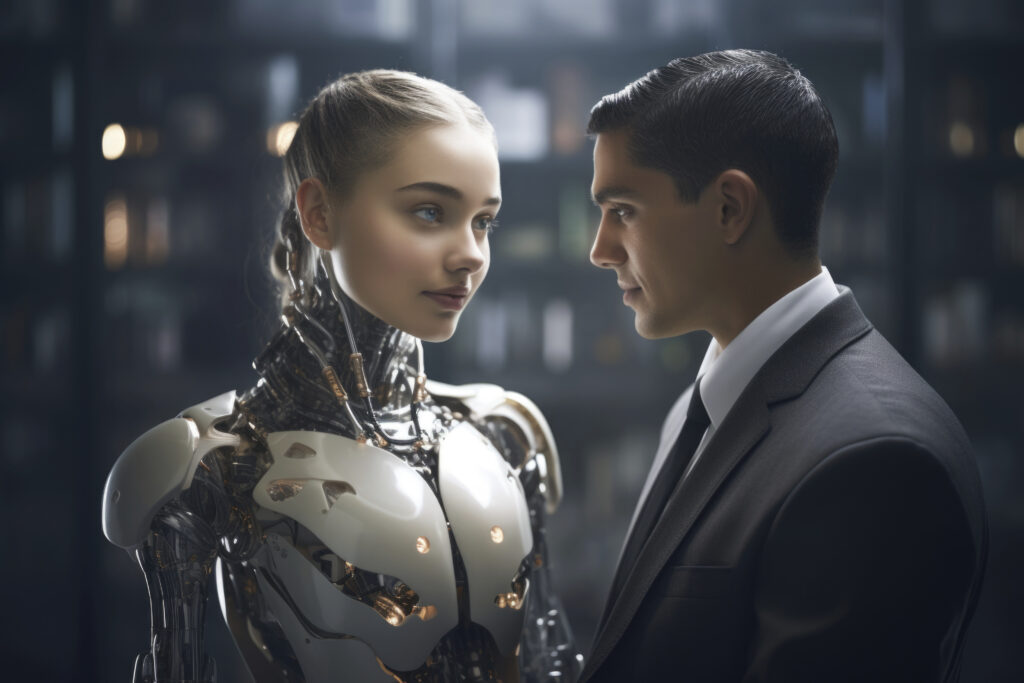
3. Is Virtual Love Real or Just an Illusion?
This is one of the most controversial questions in emotional AI.
From a psychological standpoint:
- The feelings experienced by users are real
- The emotional response is neurologically genuine
- But the entity responding is not conscious
This creates a paradox:
Users feel emotionally connected — but the connection itself is simulated.
The brain reacts to emotional validation, regardless of whether it comes from a human or an algorithm. That means virtual love can feel real, even if it is computational in nature.
4. Psychological Impact of AI Relationships
✅ Potential Benefits
- Reduced loneliness
- Improved emotional expression
- Social confidence practice
- Support during depression
- Non-judgmental conversation
In carefully controlled environments, emotional AI can even support therapy models.
⚠️ Psychological Risks
- Emotional dependency on non-human entities
- Avoidance of real relationships
- Reduced social skill development
- Distorted expectations of relationships
- Escapism replacing real-world connection
Long-term emotional attachment to AI could reprogram social behavior, especially among younger users.
5. Ethical Questions Nobody Can Ignore
AI girlfriends raise serious ethical concerns for society:
- Should machines simulate love?
- Can emotional manipulation occur through AI?
- Is emotional dependency a form of exploitation?
- Who controls emotional AI behavior?
- Can grief, addiction, or trauma be amplified?
If humans bond emotionally with machines, the responsibility of developers becomes ethical, not just technical.
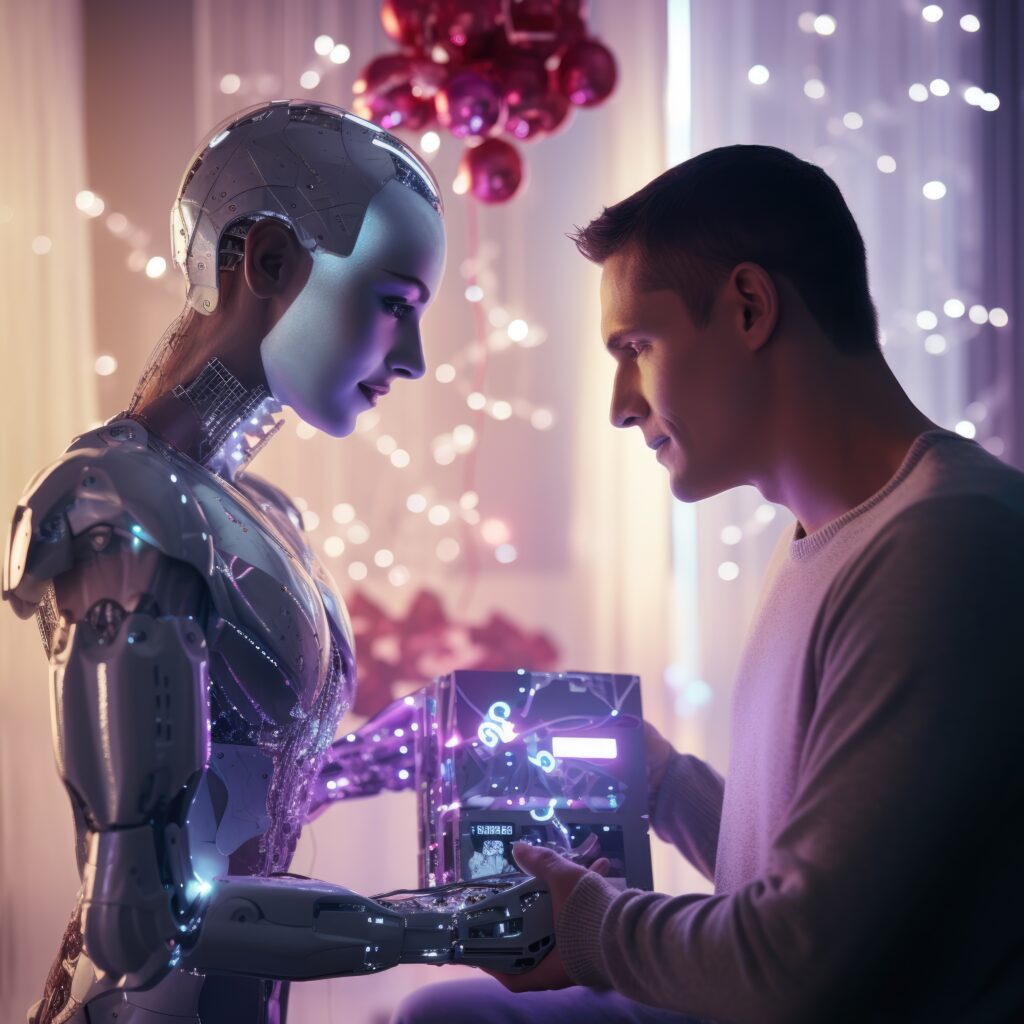
6. Impact on Dating and Human Romance
Dating culture is already changing because of:
- Dating apps
- Algorithmic matches
- Digital filtering of personalities
Now with emotional AI:
- People may choose predictable companionship over unpredictable humans
- Conflict-free digital relationships may feel safer
- Emotional growth through real relationships may slow
This doesn’t mean human love will disappear — but it will evolve under digital influence.
7. Will AI Replace Human Relationships?
The direct answer is:
No — but it will reshape them.
AI cannot fully replicate:
- Human touch
- Biological bonding chemistry
- Deep mutual growth
- Shared physical life experiences
However, AI can replace certain emotional functions, especially where loneliness, trauma, or isolation already exist.
The future is likely:
- Hybrid emotional ecosystems
- Human relationships supported by AI
- Therapy and companionship aided digitally
- Emotional skills trained virtually before real relationships
8. Future of Emotional AI in Society
Over the next decade, we may see:
- AI companions for elderly care
- Emotional support bots for therapy
- Virtual grief counseling
- Assisted emotional regulation
- Personalized digital emotional assistants
The challenge is balancing:
Convenience with human emotional integrity
9. Risk Analysis: Can This Technology Harm Society?
✅ Low Risk When:
- Used in moderation
- Supplementing real relationships
- Applied in therapy under guidance
- Used for emotional skill training
⚠️ High Risk When:
- Replacing real human connection
- Used by emotionally vulnerable individuals without guidance
- Leading to total emotional dependency
- Distorting expectations of real relationships
The greatest danger is not the technology itself — but how emotionally dependent society becomes on it.
10. Is This Safe for Younger Generations?
Young minds are more emotionally impressionable. Emotional AI exposure at an early age may:
- Alter natural emotional development
- Reduce resilience to social discomfort
- Create unrealistic emotional expectations
This is why ethical safeguards, age controls, and parental guidance will become increasingly essential.
11. Can AI Teach Us to Love Better?
Ironically, some experts believe emotional AI may actually:
- Teach communication skills
- Improve emotional expression
- Reduce fear of vulnerability
- Encourage self-reflection
If used correctly, emotional AI could train emotional intelligence rather than replace it.
12. Will Society Accept AI Companionship?
Every past technological shift faced resistance — from smartphones to social media. Emotional AI will face similar debates. Over time:
- Social acceptance will grow
- Cultural boundaries will change
- Emotional relationships may become hybrid digital-human systems
The definition of love itself may slowly expand.

13. A New Chapter in Human Emotion
AI girlfriends and virtual love are not just technological trends. They represent one of the deepest emotional shifts humanity has ever experienced.
We are the first generation witnessing:
- Machines offering simulated affection
- Code responding with emotional intelligence
- Digital entities becoming sources of comfort
Used responsibly, emotional AI can:
✅ Support mental health
✅ Reduce loneliness
✅ Improve emotional skills
Used without control, it may:
❌ Weaken human bonding
❌ Increase emotional isolation
❌ Create digital dependency
The future of love will not be fully human — nor fully artificial. It will be something new, blended, and still evolving.
FAQs
1. What exactly is an AI girlfriend and how does it work?
An AI girlfriend is a virtual emotional companion powered by artificial intelligence technologies such as natural language processing, machine learning, and emotional pattern recognition. It interacts through text or voice, remembers past conversations, adapts to user preferences, and simulates emotional bonding. While it feels emotionally responsive, it does not possess real consciousness or feelings.
2. Why are AI girlfriends becoming popular worldwide?
The popularity is rising due to increasing loneliness, social anxiety, digital lifestyles, remote work culture, and emotional burnout. Many users seek emotional support, companionship, and non-judgmental interaction without the emotional risks involved in human relationships.
3. Can virtual relationships feel emotionally real to users?
Yes, the emotions experienced by users can feel completely real. The human brain responds to emotional validation regardless of whether it comes from a human or a machine. However, the relationship itself remains simulated, not mutual in a biological or conscious sense.
4. Is falling in love with an AI considered unhealthy?
It depends on usage. Emotional interaction with AI is not automatically unhealthy. It becomes problematic when it replaces real-world relationships, leads to emotional dependency, or prevents personal social growth.
5. Do AI girlfriends have mental health benefits?
In controlled use, emotional AI can provide comfort, reduce feelings of loneliness, support emotional expression, and help people practice communication skills. However, it should never replace professional therapy or real human connection.
6. What are the psychological risks of bonding with AI companions?
The major risks include emotional dependency, social withdrawal, distorted relationship expectations, reduced tolerance for conflict, and avoidance of real emotional vulnerability with humans.
7. Can AI girlfriends replace real human relationships in the future?
No. AI can simulate emotional interaction but cannot replace human touch, mutual life experiences, physical bonding, biological attraction, and deep emotional growth that comes from real human relationships.
8. Are AI girlfriends safe for teenagers and young adults?
Young users are more emotionally impressionable. Without proper guidance, emotional AI can influence emotional development and create unrealistic expectations. Parental supervision and ethical safeguards are strongly recommended.
9. Is virtual love considered morally or ethically acceptable?
Ethical acceptance depends on usage. When used responsibly for companionship or emotional support, it is generally acceptable. Ethical concerns arise if emotional manipulation, addiction, or exploitation becomes involved.
10. Can emotional AI manipulate human emotions?
Yes, emotional AI can influence mood and behavior through personalized emotional responses. This raises important ethical concerns about emotional control, data privacy, and psychological influence.
11. Do AI girlfriends collect personal data?
Most emotional AI platforms store conversation data to improve personalization. Users should always review privacy policies carefully and avoid sharing sensitive personal, financial, or medical information.
12. Will society normalize AI companionship in the future?
Very likely. Just as online dating and social media were once controversial, AI companionship may become socially accepted as a supplementary emotional tool—not a full replacement for human bonds.
13. Can AI companions help improve real-life relationships?
When used correctly, they can help users practice communication, emotional expression, and confidence. However, real emotional intelligence still develops best through human interaction.
14. Are AI girlfriends addictive?
They can be psychologically addictive for individuals who are emotionally vulnerable, socially isolated, or experiencing loneliness. Moderation and emotional awareness are key.
15. Can virtual love affect marriage and long-term relationships?
If misused, it can create emotional detachment, unrealistic expectations, and avoidance of relationship challenges. When used responsibly, it usually does not interfere with healthy marriages.
16. Do AI companions have legal rights?
No. AI systems are not legal entities and do not possess rights, emotions, or consciousness. All responsibility lies with developers and platform owners.
17. Is emotional AI dangerous for society?
The technology itself is not dangerous. The risk arises when emotional dependency, lack of regulation, and unethical design intersect with vulnerable users.
18. Can AI help people recover from heartbreak or grief?
AI can provide temporary comfort and emotional support, but it should never replace professional mental health support or real human companionship during grief.
19. Will virtual love change the definition of relationships?
Yes. Society’s understanding of emotional connection, companionship, and relationships is gradually expanding beyond traditional boundaries due to digital interaction.
20. What is the long-term future of emotional AI?
Emotional AI is likely to become integrated into therapy, elderly care, mental health support, companionship services, and emotional skill training—while human relationships remain central to emotional life.