
Introduction: The Uncomfortable Truth About Time
Every human life comes with an invisible countdown.
We don’t know the exact number, but we know one thing with certainty: time is finite. No matter who you are, where you live, or how ambitious your goals may be, your daily allocation is the same — 24 hours. Once a moment passes, it never returns. There is no backup, no reset, no extension.
Yet most people live as if time is unlimited.
We postpone dreams. We delay learning. We wait for “the right moment.” Years slip by quietly, not because we are lazy, but because life consumes time faster than we realize. Work, responsibilities, distractions, and inefficiencies slowly eat away at our most valuable resource.
For the first time in human history, however, something extraordinary is happening.
Artificial Intelligence is not just changing industries or automating tasks — it is changing our relationship with time itself.
This article explores a powerful idea: how AI, when used intentionally, can help humans reclaim time, live more consciously, and build a future where life is not just faster — but more meaningful.
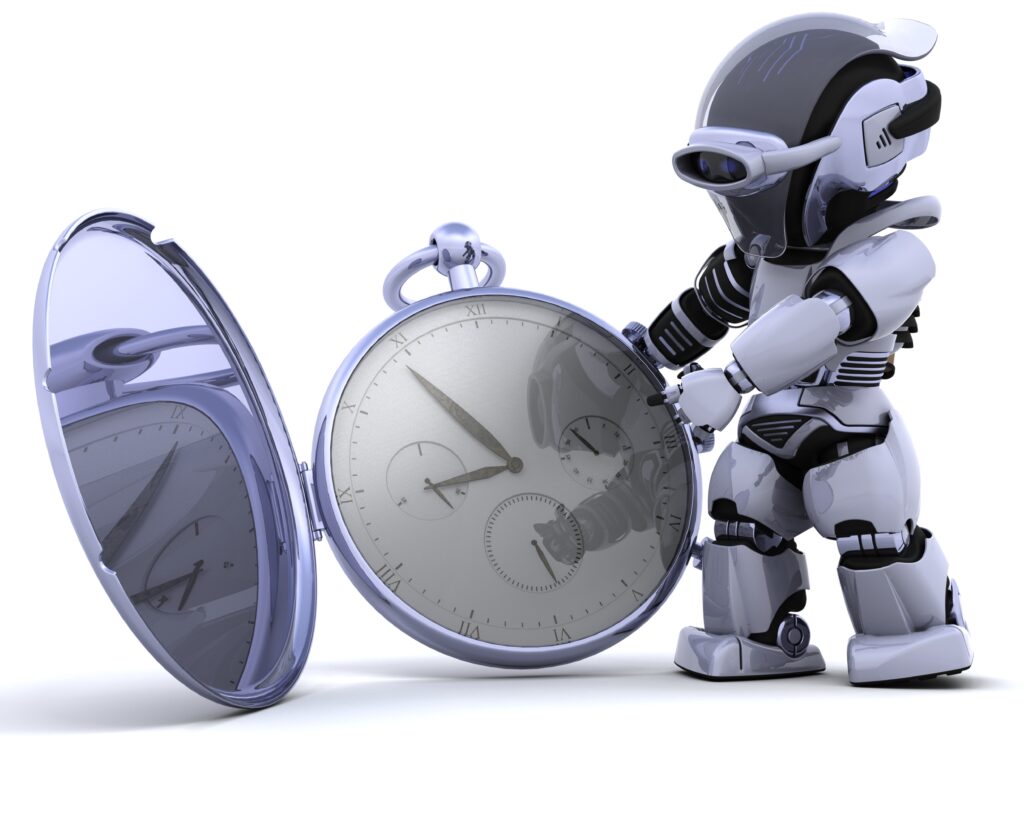
Time: The Only Resource That Never Grows
Money can be earned again. Skills can be relearned. Even mistakes can be corrected.
Time cannot.
The average human lifespan globally is around 75–80 years. Out of those years:
- Nearly one-third is spent sleeping
- A large portion is consumed by work and commuting
- Significant time goes to responsibilities, obligations, and routine tasks
What remains — the time for growth, creativity, relationships, and self-reflection — is surprisingly small.
This is why time is not just a resource. It is life itself.
When we say we “don’t have time,” what we are really saying is:
“This part of my life is being spent elsewhere.”
And for generations, humans accepted inefficiency as unavoidable. Research took days. Learning took years. Simple tasks demanded enormous effort. We didn’t waste time deliberately — we had no alternative.
Until now.
Life Before AI: Effort Was the Only Option
Before the rise of intelligent systems, progress was slow and linear.
To learn something new, you had to:
- Search manually through books or websites
- Filter unreliable information
- Spend weeks understanding basic concepts
To create something meaningful, you had to:
- Start from scratch
- Repeat similar processes again and again
- Spend hours on tasks that didn’t require creativity, only effort
This wasn’t failure — it was reality.
Human civilization advanced through persistence, not efficiency. Time loss was normal, accepted, and invisible. People believed that long hours equaled productivity, even when much of that time was spent on repetitive or low-value work.
AI did not appear to make humans lazy.
It appeared to remove unnecessary friction.
AI Is Not Replacing Humans — It Is Replacing Wasted Time
One of the biggest misunderstandings about artificial intelligence is that it exists to replace people.
In reality, AI replaces inefficiency.
AI does not eliminate thinking — it eliminates repeated thinking.
It does not remove creativity — it removes mechanical effort.
It does not shorten life — it shortens the path between intention and outcome.
Tasks that once took hours can now take minutes:
- Drafting content
- Analyzing data
- Summarizing information
- Planning schedules
- Learning new concepts
This time compression is not just convenient — it is transformational.
When humans spend less time on repetitive tasks, they regain time for:
- Deeper thinking
- Better decisions
- Stronger relationships
- Health and well-being
- Purposeful work
AI, when used correctly, becomes a time multiplier.
How AI Is Quietly Saving Time in Everyday Life
1. AI and Learning: Faster Understanding, Deeper Knowledge
Traditional learning often overwhelms people with information. AI helps filter, summarize, and personalize learning paths.
Instead of:
- Reading hundreds of pages
- Watching hours of unfocused content
People can now:
- Get concise explanations
- Learn at their own pace
- Focus on understanding, not searching
This doesn’t reduce intelligence — it increases clarity.
2. AI and Work: Fewer Hours, Better Output
In modern workplaces, much time is spent on:
- Emails
- Reports
- Documentation
- Data organization
AI tools help professionals focus on decision-making instead of preparation.
The result is not just productivity, but reduced burnout. When work consumes less mental energy, people have more capacity for innovation and balance.

3. AI and Creativity: Removing the Blank Page Problem
Creativity often suffers not from lack of ideas, but from lack of momentum.
AI helps creators:
- Structure thoughts
- Explore variations
- Refine drafts
This does not replace originality. Instead, it accelerates expression, allowing humans to spend more time refining ideas rather than struggling to begin.
4. AI and Daily Life: Invisible Time Savings
From scheduling reminders to managing tasks, AI quietly removes friction from daily routines.
Small savings matter:
- Minutes saved daily become hours monthly
- Hours saved monthly become weeks over years
These reclaimed moments often go unnoticed — but they accumulate into a better quality of life.
Time Awareness: The Psychological Shift AI Is Creating
One of the most profound effects of AI is not technological — it is psychological.
As tasks take less time, people begin to notice time.
They ask deeper questions:
- Why am I doing this?
- Is this worth my attention?
- What matters most today?
AI exposes inefficiency, and in doing so, forces awareness.
This awareness leads to conscious living — a shift from being busy to being intentional.
AI does not give you more years.
It gives you more control over the years you already have.

The Future: AI as a Personal Time Architect
Looking ahead, AI is likely to become more personal and predictive.
Future systems may:
- Optimize daily schedules based on energy levels
- Suggest learning paths aligned with long-term goals
- Anticipate needs before they become problems
- Reduce decision fatigue
The future is not about humans doing less — it is about humans doing what matters most.
AI will not define purpose. Humans still must choose it.
The Risk: Saving Time Without Meaning
Every powerful tool carries responsibility.
AI can save time — but it can also help waste time faster if used without intention.
Risks include:
- Endless consumption instead of creation
- Over-automation without reflection
- Losing depth in favor of speed
AI amplifies behavior.
If intent is shallow, outcomes will be shallow.
If intent is meaningful, outcomes can be extraordinary.
The difference is not the technology — it is the human using it.
A Global Perspective: Why This Matters Everywhere
This conversation is not limited to one country or culture.
Across the world:
- People feel busier than ever
- Attention is fragmented
- Time pressure is universal
AI offers a rare opportunity — not to escape responsibility, but to redesign how time is spent.
Whether someone is a student, parent, professional, or creator, the question remains the same:
“How will I use the time I reclaim?”

The Most Important Question of the AI Era
Human life has always been limited.
What has changed is not lifespan — it is leverage.
For the first time, humans have tools that can compress effort, accelerate learning, and reduce unnecessary struggle. AI is not here to make life faster for its own sake. It is here to make room for what truly matters.
The real question of this era is not:
- Will AI take jobs?
- Will AI replace humans?
The real question is far simpler and far more personal:
What will you do with the time AI gives back to you?
Because in the end, time is not measured in hours —
it is measured in moments that mattered.
Frequently Asked Questions (FAQs)
1. Why is time considered the most limited resource in human life?
Time is limited because it moves only in one direction and cannot be stored, recovered, or expanded. Unlike money or skills, once time passes, it is permanently gone. This makes time the most valuable and irreplaceable resource in human life.
2. How can artificial intelligence help people save time?
Artificial intelligence saves time by automating repetitive tasks, accelerating research, simplifying decision-making, and reducing manual effort. AI helps people complete tasks faster so they can focus on higher-value activities like creativity, learning, and personal growth.
3. Does using AI make people less productive or dependent?
No, when used responsibly, AI increases productivity rather than reducing it. AI supports humans by handling routine work, allowing people to apply critical thinking and creativity where it matters most. Productivity depends on how intentionally AI is used.
4. Can AI really improve quality of life, not just speed?
Yes. AI improves quality of life by reducing stress, saving mental energy, and freeing up time for relationships, health, and meaningful pursuits. The goal is not to work faster, but to live more intentionally with the time saved.
5. Is AI only useful for professionals and businesses?
No. AI benefits students, parents, creators, freelancers, and everyday users. From learning support to daily task management, AI tools are increasingly accessible and useful across all age groups and lifestyles.
6. What are the risks of relying too much on AI?
Over-reliance on AI can reduce deep thinking, creativity, and personal judgment if used without awareness. AI should assist decision-making, not replace human responsibility, values, or purpose.
7. How does AI change the future of time management?
AI enables smarter scheduling, personalized workflows, and predictive planning. In the future, AI will help people manage energy, priorities, and focus more effectively, not just manage hours on a clock.
8. Is this topic safe for Google AdSense and long-term SEO?
Yes. Discussions around time, productivity, and AI education are considered high-quality, non-controversial content. This topic is evergreen, informative, and suitable for long-term search visibility and AdSense monetization.
9. Can AI help people live more meaningful lives?
AI can create space for meaning by removing unnecessary effort and distractions. However, meaning comes from human choices. AI provides the time — humans decide how to use it.
10. What is the most important question people should ask in the AI era?
The most important question is not what AI can do, but how people choose to use the time AI saves. Intentional use of time defines the value of AI in human life.